March feels like a fitting time to talk about what we do — and why we do it the way we do.
It’s B Corp Month, which means it’s a moment to celebrate businesses using profit as a force for good. It’s also Women’s History Month. At Union Wine Company, those two things aren’t separate conversations. They’re the same one.
What B Corp Actually Means
B Corp certification isn’t a marketing label. It’s a rigorous third-party standard administered by B Lab, a nonprofit that evaluates companies across five areas: how they treat their workers, their community, their environment, their customers, and how they govern themselves. To certify, companies must meet a minimum score, pass a verification process, and recertify every few years. It’s designed to be hard to get — and harder to keep.
Oregon is home to the largest concentration of B Corp certified wineries and vineyards of any state or country in the world. That’s not a coincidence. It reflects something real about this wine community: a shared belief that how you make something matters as much as what you make.
We’ve been part of that community for years. Here’s what it actually looks like from the inside.
The Team Behind It
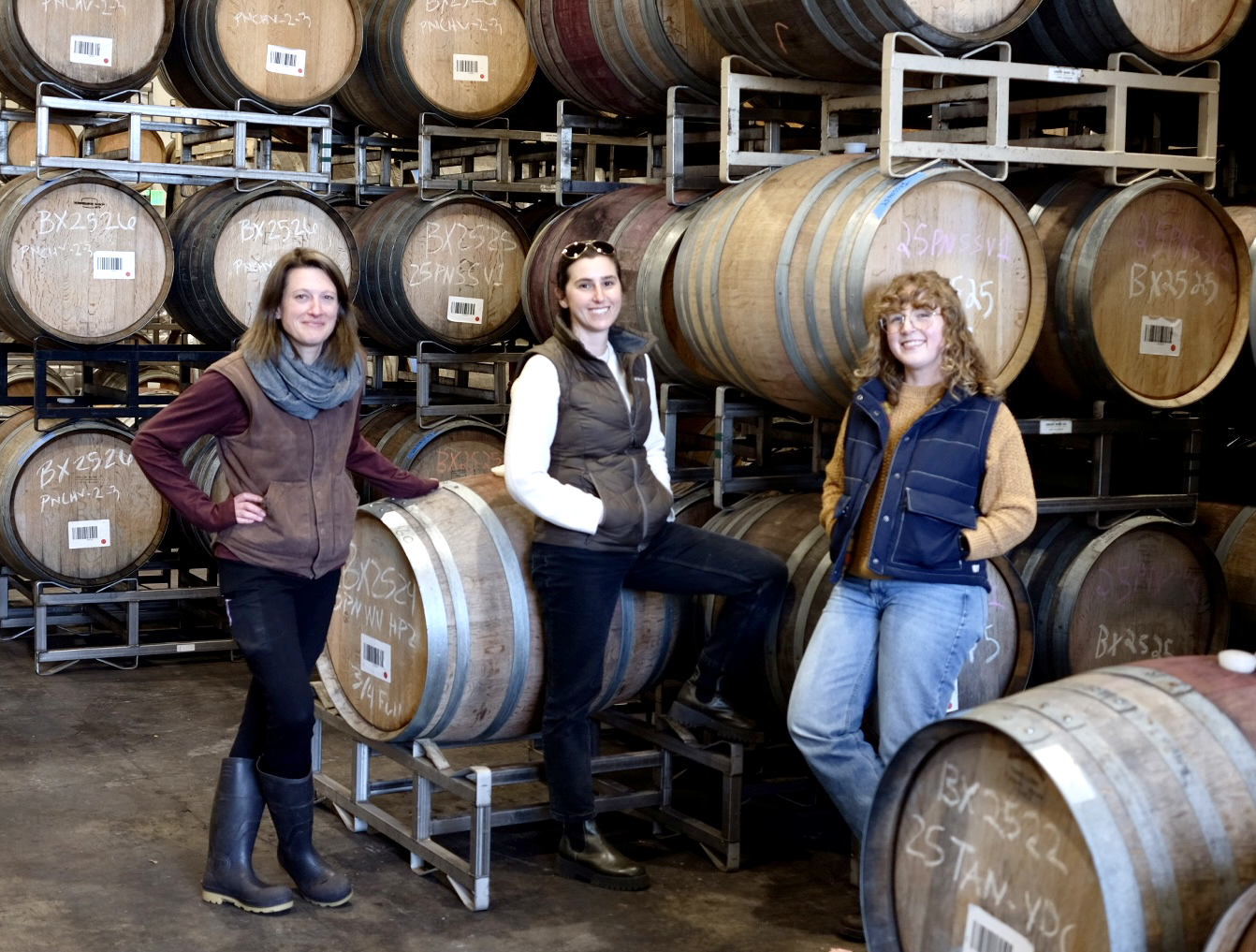
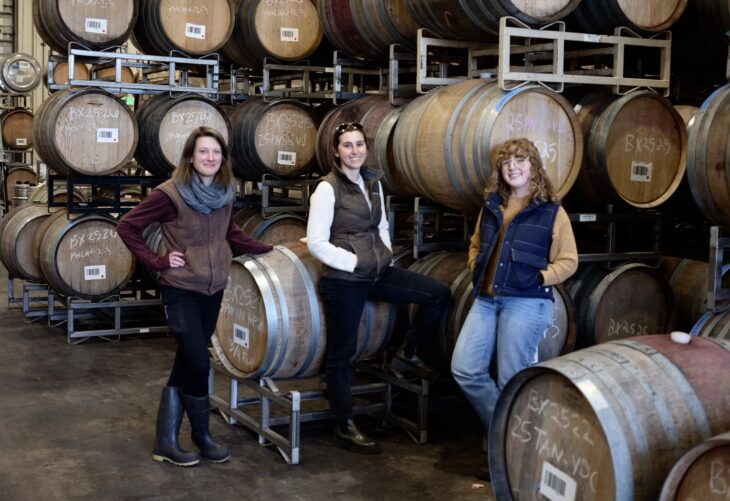
Our winemaking team is fully women-led. In an industry that has historically skewed otherwise, that didn’t happen by accident. It’s something we’re proud of — and something we believe makes us better.
In the words of our winemaker, Joanna Engel:
“We are unique and making strides in an industry that has traditionally been male dominated. The three of us have gotten here along very different paths which gives us the ability to think outside the box. Also, let’s face it, research has shown women tend to have more sensitive palates than men, which is important in winemaking decisions.” — Joanna Engel
B Corp holds us accountable not just for what ends up in the bottle, but for the team that gets it there. The people making our wine are at the center of that standard.
Inside the Winery: Water
Winemaking uses a lot of water — most of it in cleaning and processing. It’s unglamorous, but it’s where the real environmental work happens.
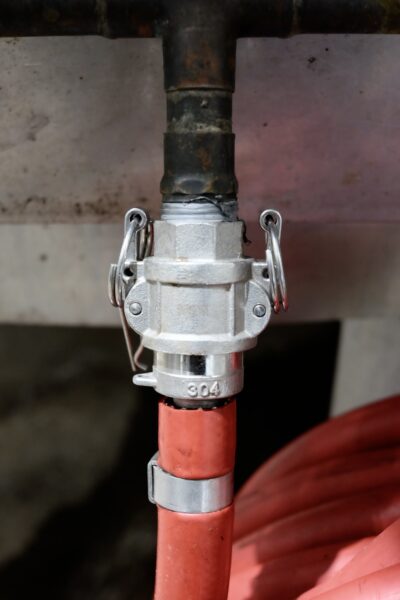
This past year our team made two meaningful changes. First, we switched all water hose connections over to cCamlock fittings — a more secure connection that reduces leaking and cuts down on water waste during tank cleaning. Second, the pump for our lees filtration process requires water cooling to run. Rather than drawing fresh water continuously, we set up a recirculation system through a holding tank and heat exchanger, so the same water loops through the system instead of running straight to drain.
The results are measurable:
“One of the most reliable metrics we can look at for this is our process waste volume — essentially everything that goes down the drain in the processing areas of our production space. We have seen an average 8% reduction per year in discharge volume since 2019. This means we’ve implemented more efficient use of water for sanitation and operating tasks and are better identifying and repairing sources of leaks or water wastage.” — Joanna Engel
Neither of these changes made headlines, but this is exactly what B Corp accountability looks like in practice: finding the unglamorous inefficiencies and fixing them.
The X-Bin Garden
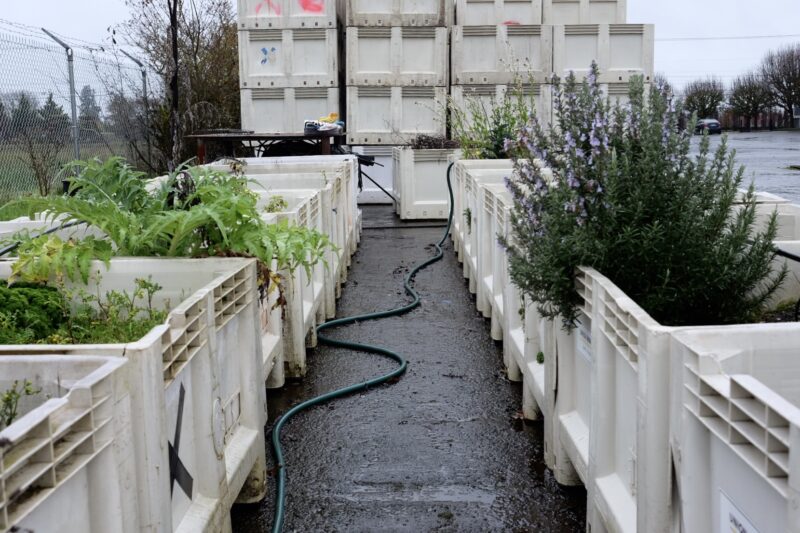
This one is our favorite.
When picking bins get damaged beyond use in the vineyard, the default is to throw them out. Our winemaking team had a different idea: turn them into raised garden beds. The x-bin garden is now a working vegetable garden on our property that staff can tend and harvest from throughout the season.
It’s a small thing. It’s also exactly the kind of thinking B Corp encourages: before you throw something away, ask if it can be something else.
Recycling — Inside and Out
Our biggest sustainability statement to our customers is the Underwood can. Aluminum is infinitely recyclable — unlike glass, it doesn’t degrade through the recycling process. It’s lighter to ship, which means lower emissions getting it from our facility to wherever you’re drinking it. And a can goes where a bottle can’t: a trail, a beach, a concert, where glass isn’t allowed.
We didn’t want that commitment to stop at packaging. This year we also set up an e-recycling drop program for our team. E-waste accumulates, and most of it ends up in a landfill. When we’ve collected enough, it goes to a dedicated e-recycling business nearby. A simple system, but one that closes a loop we’d left open.
Giving Back
B Corp accountability extends beyond how we make wine to what we do with the business we’ve built. Over the past five years, we’ve donated over $150,000 to nonprofits, with a focus on environmental and human rights, including the National Parks Conservation Association, Planned Parenthood, The Nature Conservancy, Solve Oregon, The Venture Out Project and more. Our staff have collectively volunteered 1,200+ hours in the community.
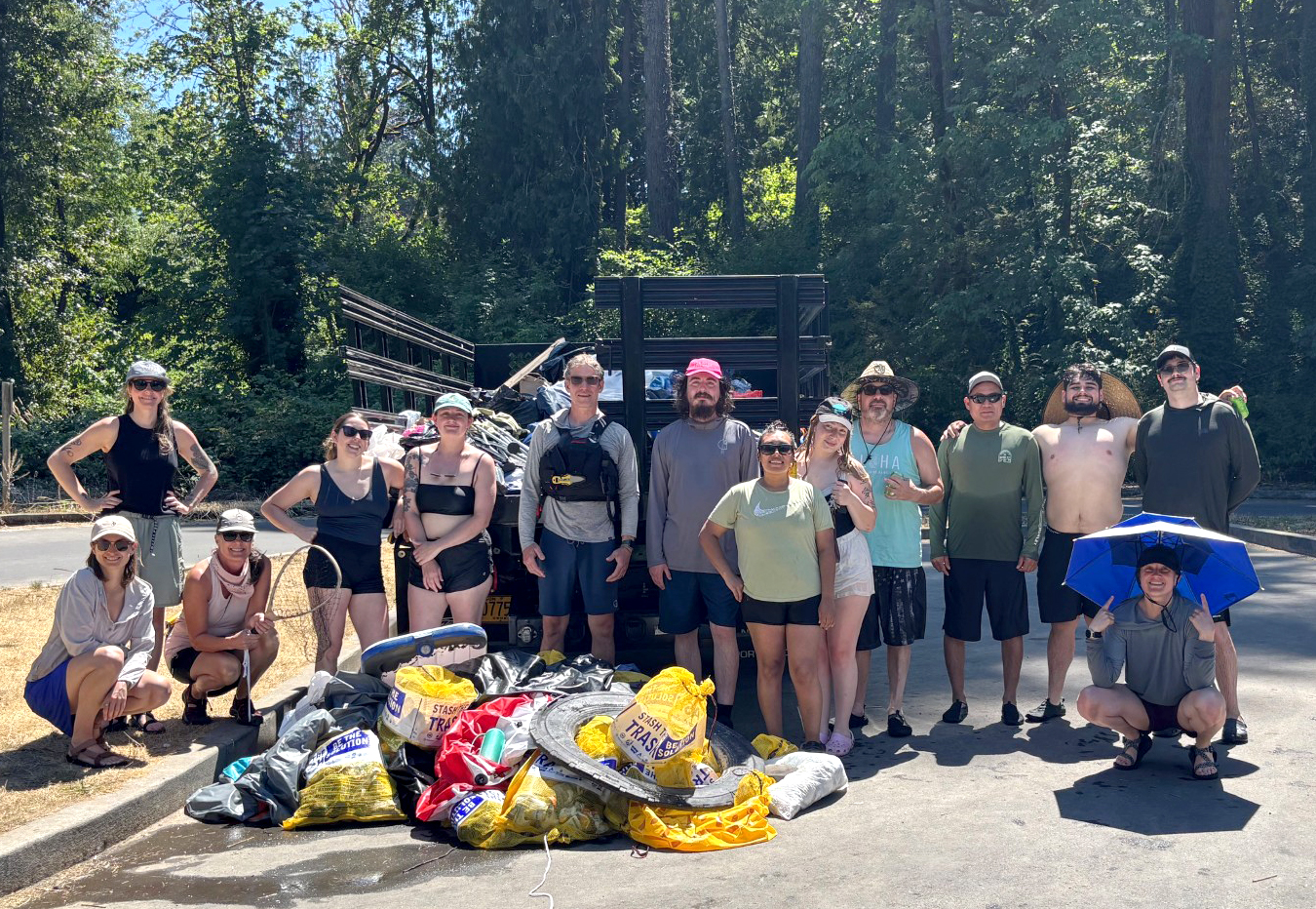
“One of the ways we give back is through an annual river cleanup with SOLVE where employees are paid for the day to float a stretch of the Clackamas River and collect litter along the way. The amount of rubbish we’ve pulled out of the river over the last 3–4 years is astonishing and such a fun way to make a positive impact on our environment and community.” — Joanna Engel
The Vineyards
Our estate vineyards aren’t just sources of fruit. They’re working ecosystems we’re responsible for, and we farm them like we plan to pass them down, because we do.
Farming responsibly doesn’t mean following a single philosophy or claiming a label. It means constantly evaluating your impact and making decisions that balance the health of the land, the vines, the wildlife, and the people working in it.
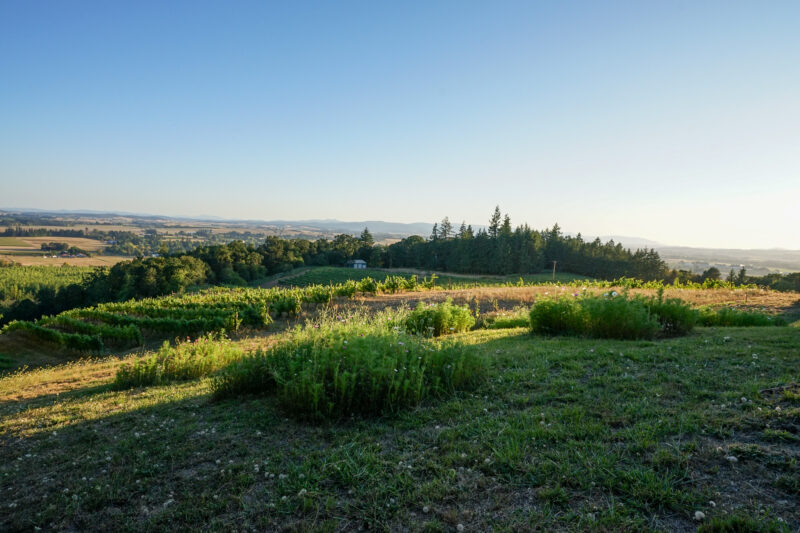
In practice, it looks like this: pollinator islands and native plant corridors throughout our properties supporting beneficial insects, birds, and wildlife. Sheep grazing for natural vegetation management in the spring. Cover crop diversity to keep the ecosystem in balance across seasons. Precision irrigation and dry farming where soil and climate allow. Integrated pest management to reduce chemical inputs. And vine-to-package oversight that gives us direct visibility into our carbon footprint from the ground up.
Soil health is something we think about year-round through cover crops, green manures, and carefully considered tillage decisions. We don’t believe in blanket approaches. What we do believe in is paying attention, being willing to change course, and farming in a way we’re not embarrassed to explain in full.
Why It Matters
B Corp certification isn’t something you set and forget. It’s a standard you’re held to by an outside organization that will come back and verify your work again. That accountability is the point.
This March, with Women’s History Month and B Corp Month overlapping, we find ourselves thinking about both at once — because at Union Wine Company, they’ve always been part of the same story. A women-led team making wine we’re proud of, inside a company held to a standard we didn’t set for ourselves.
When you open one of our cans or pour a glass, that’s what you’re getting.